
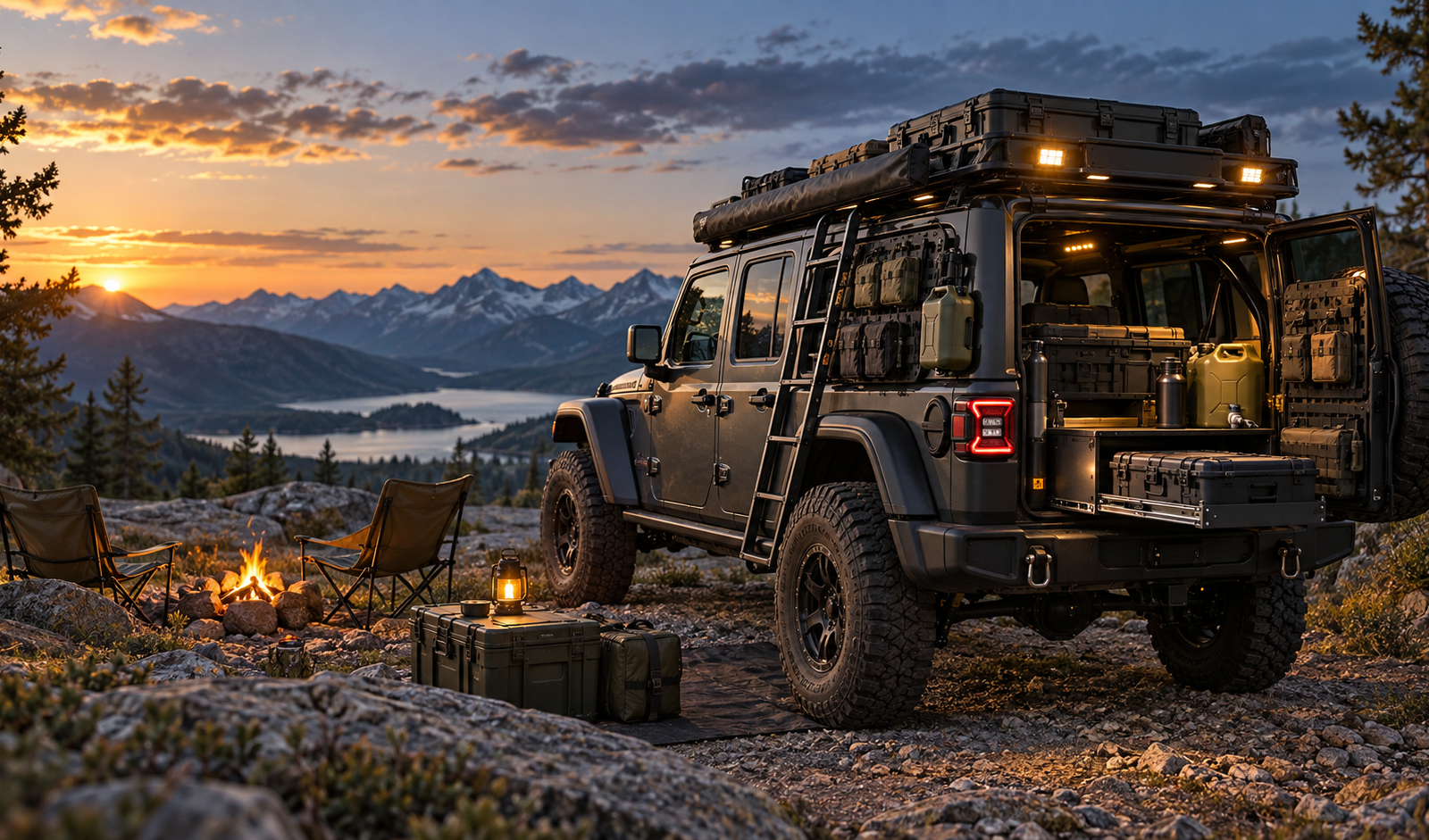
Overland Modular Utility parts are designed to make a vehicle more useful during long-distance travel, camping, trail driving, and recovery preparation. The idea is simple: every accessory should improve storage, access, lighting, fuel support, water planning, or everyday utility. For OMU, this concept connects multiple off-road accessories into one smarter vehicle system.
A strong OMU overland modular utility build does not add parts randomly. It starts with the driver’s real needs. What gear must be carried? What needs fast access? What belongs outside the cabin? What should stay protected inside? What must be reached at night? The answers shape the build.
What Does Overland Modular Utility Mean?
Overland Modular Utility means the vehicle is divided into practical gear zones. The roof handles bulky cargo. The side area supports small tools and pouches. The tailgate becomes a rear work zone. A Jerrycan kit supports fuel or water. A-pillar lighting helps at night. A door hinge step makes roof gear easier to reach.
This matters because overland travel involves repeated actions. The driver may need to check straps, grab gloves, pull out a flashlight, access a water container, unpack camp gear, or inspect a roof box. A modular utility system reduces the time spent searching, unloading, and rearranging.
| Utility Zone | Best Gear | Recommended Product Type |
|---|---|---|
| Roof zone | Storage boxes, camping bags, recovery boards | Roof rack |
| Side zone | MOLLE pouches, straps, small tools | Rear window storage panel |
| Rear zone | Camp tools, gloves, quick-use gear | Tailgate cargo basket |
| Liquid support zone | Fuel or water | Jerrycan kit |
| Visibility zone | Night trail and campsite lighting | A-pillar spotlight |
| Access zone | Roof cargo loading and inspection | Door hinge step |
Rule 1: Separate Bulky Cargo from Cabin Gear
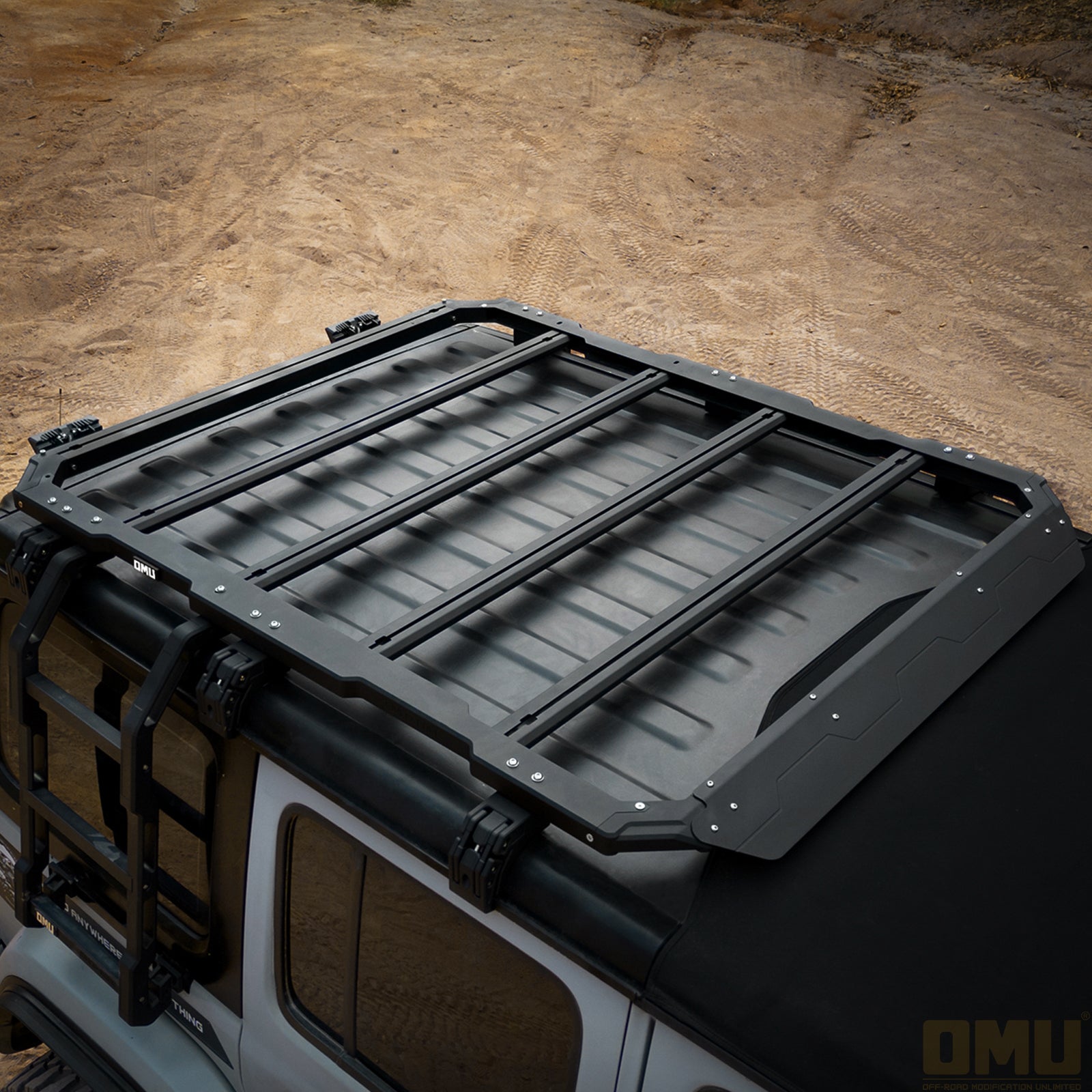
The roof is the best place for many bulky items that do not need full cabin protection. This may include storage boxes, camp bags, recovery boards, lightweight outdoor gear, or large accessories that take too much space inside. By moving bulky cargo upward, the interior can remain cleaner and more comfortable.
Recommended Roof Utility Part
Rule 2: Keep Small Tools Visible and Accessible
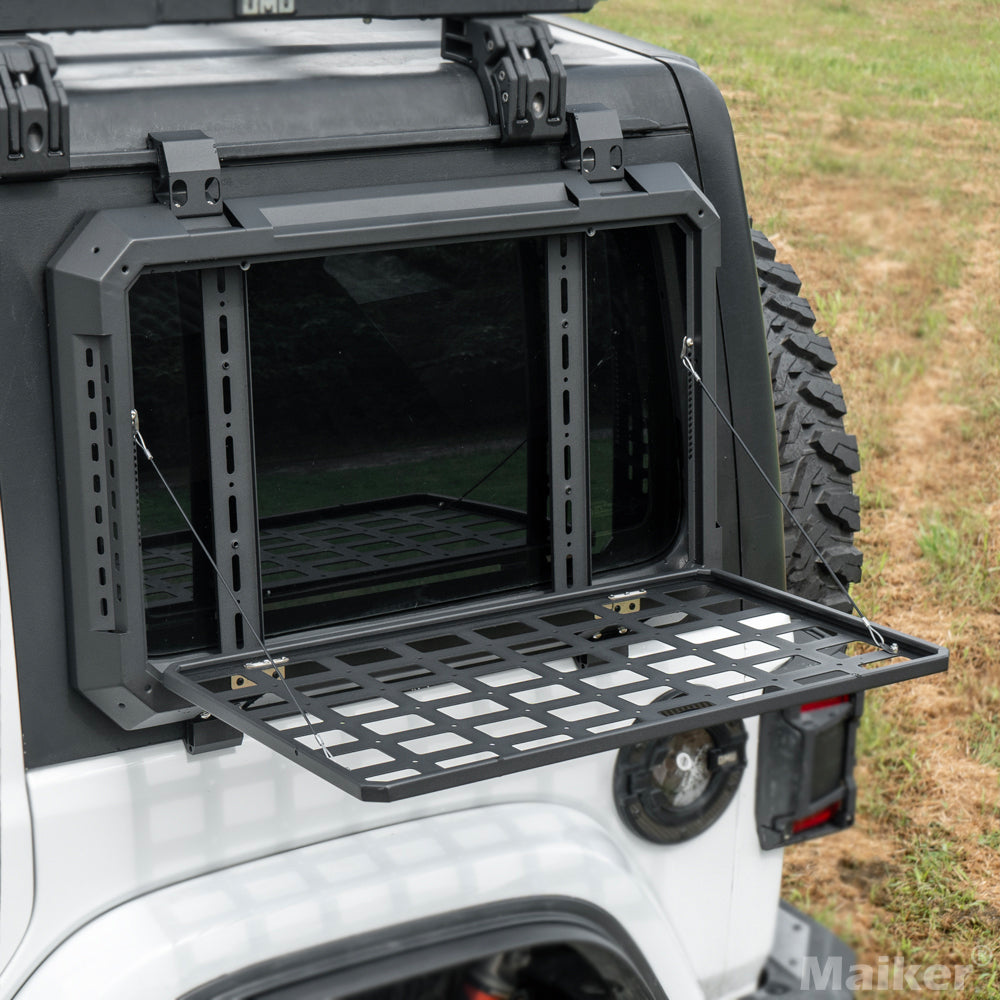
Small gear causes some of the biggest organization problems. Recovery gloves, tie-down straps, compact tools, tire accessories, lighting gear, and first-aid items can easily disappear into boxes or bags. Side storage helps prevent this by creating a visible utility zone.
A rear window panel or MOLLE setup can hold the items that are used during trail stops. This is useful because many off-road tasks happen outside the vehicle. The owner should not need to unload half the cargo area to find one small pouch.
Recommended Side Utility Part
Rule 3: Build a Rear Work Zone
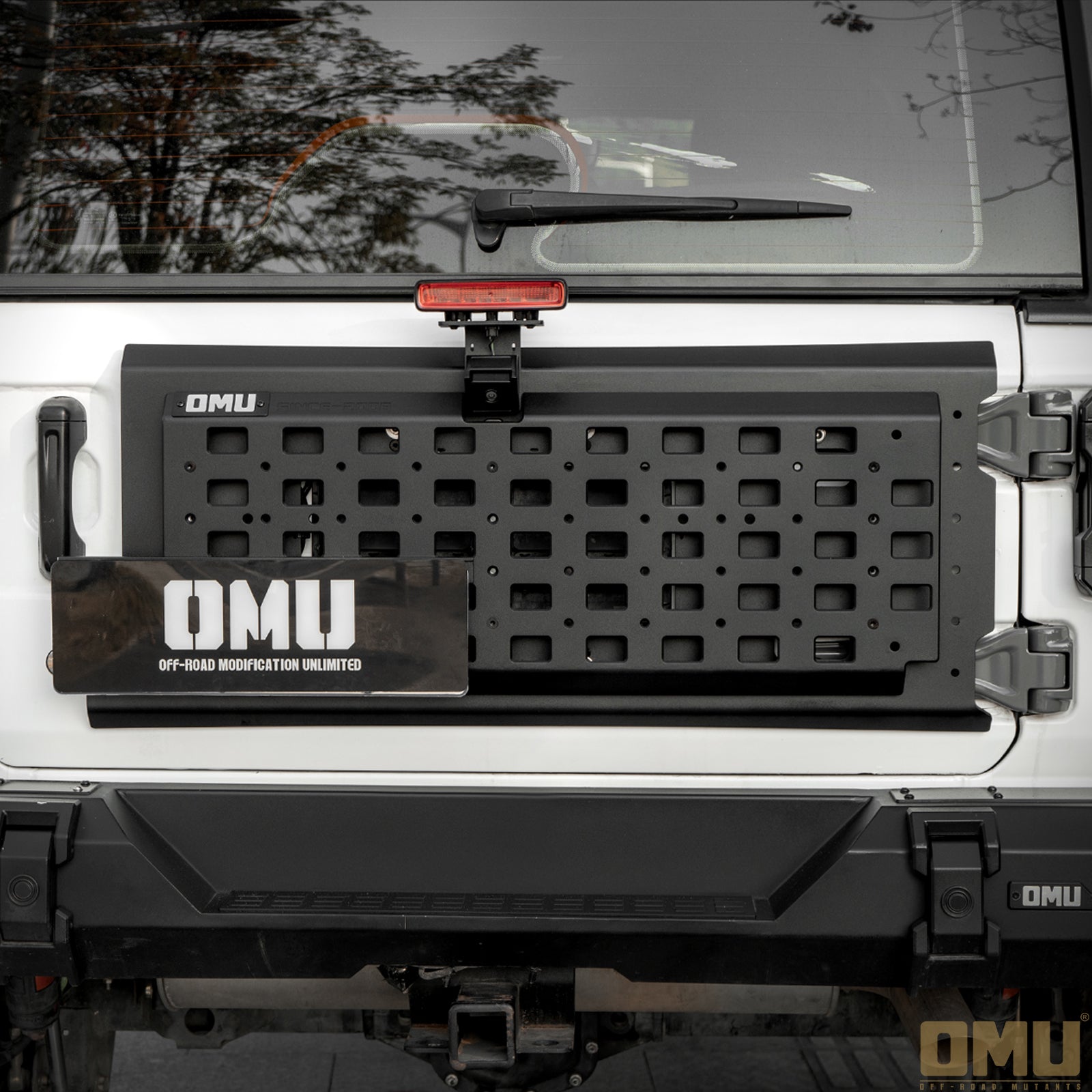
The rear of the Jeep often becomes the center of activity at camp. Owners open the tailgate, unpack tools, prepare gear, check straps, and organize small items. A tailgate cargo basket can create a simple rear work zone where frequently used gear stays visible.
This works well with the modular utility concept because the tailgate should not carry everything. It should carry the gear that benefits from quick rear access. Larger gear can stay on the roof or cargo floor, while smaller rear-use items can stay in the basket.
Recommended Rear Utility Part
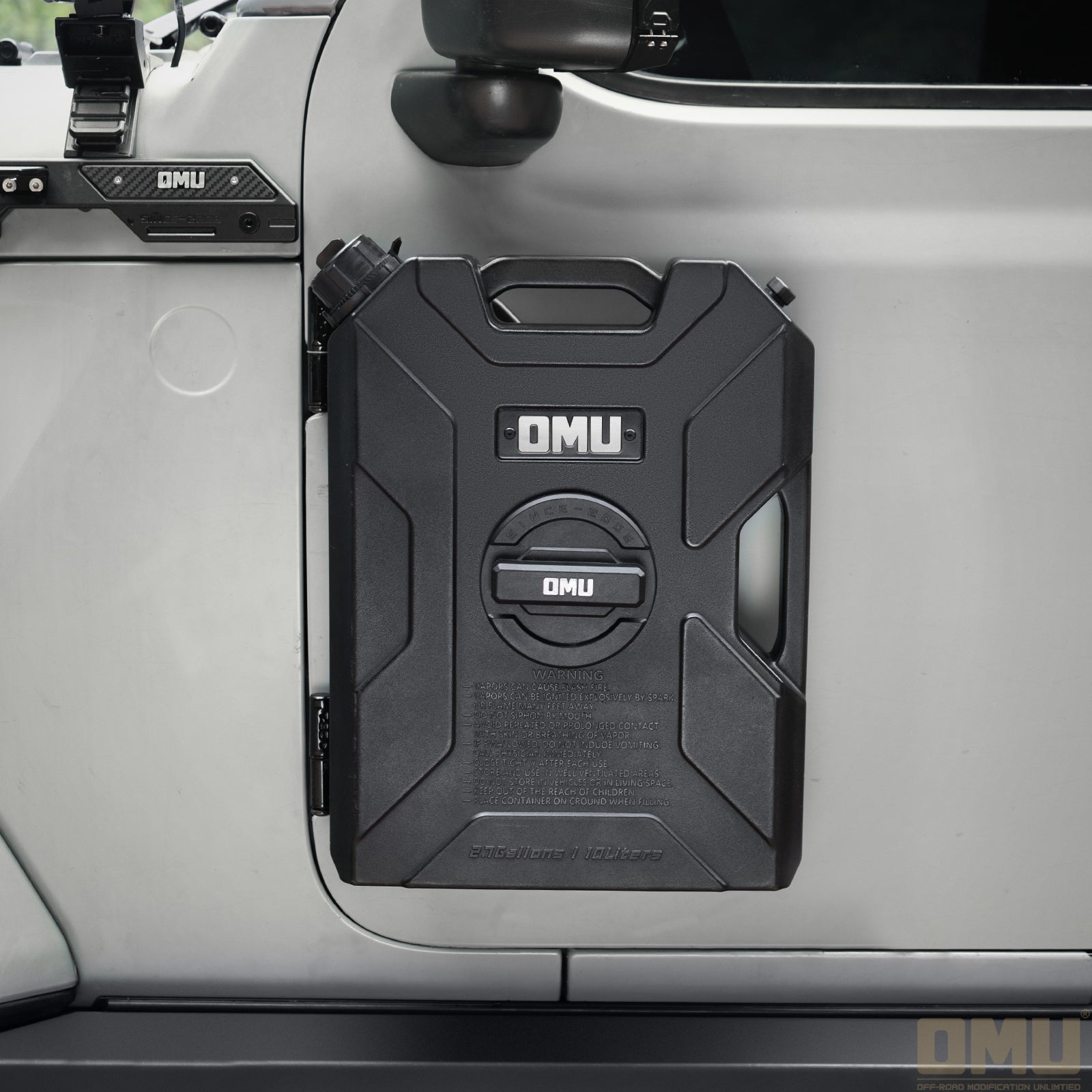
Rule 4: Give Fuel or Water Its Own Place
Fuel and water should not be treated like random cargo. On longer routes, they need their own plan. Carrying containers inside the cabin can interfere with luggage, tools, food, and camping gear. A Jerrycan kit gives fuel or water a dedicated exterior location and keeps the interior easier to manage.
Recommended Liquid Support Part
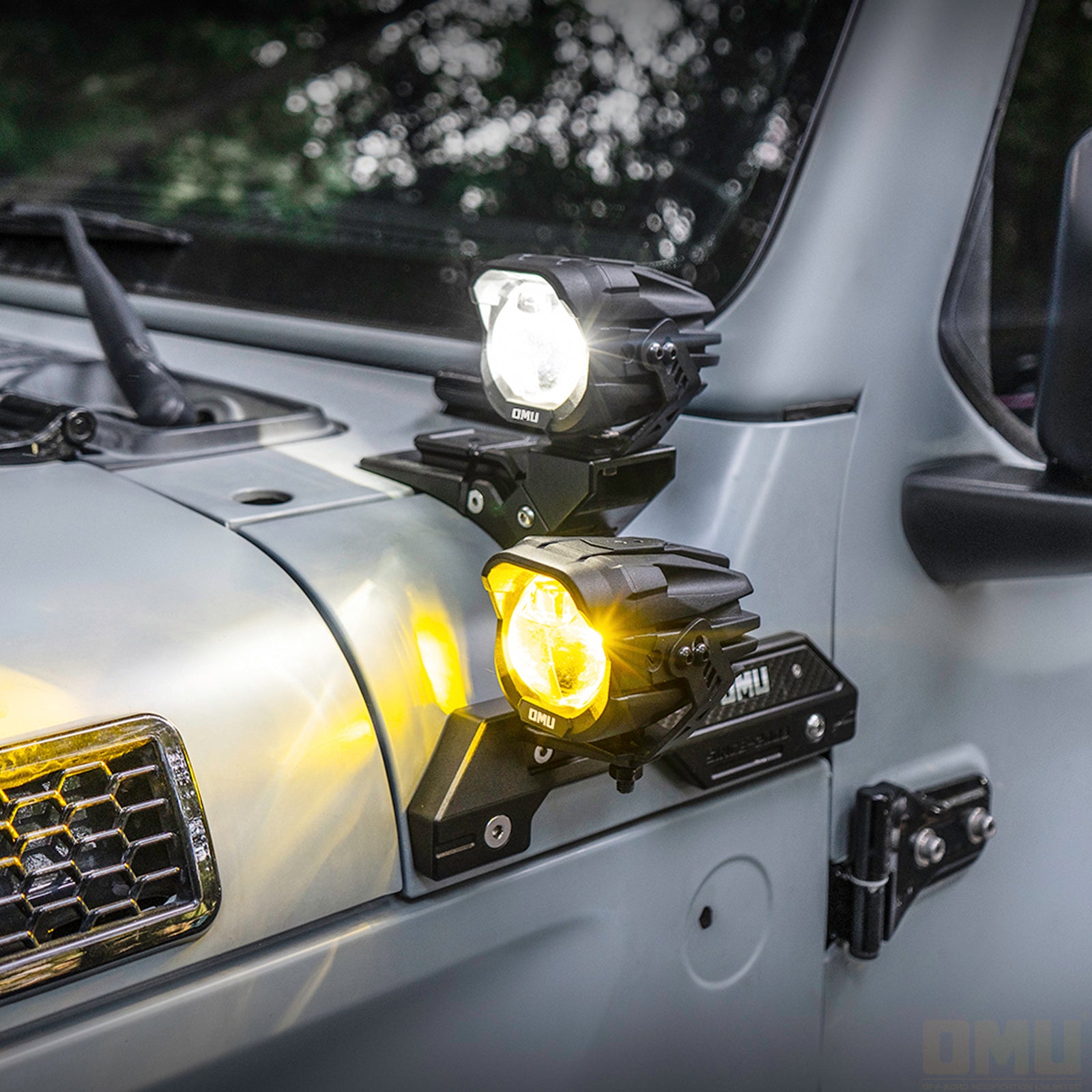
Rule 5: Add Lighting Where Factory Headlights Are Weak
Modular utility also includes visibility. Factory headlights are useful on roads, but trail driving often requires awareness around front corners and side edges. A-pillar lighting helps illuminate areas that may be missed during turns, campsite entry, or low-speed obstacle checks.
Recommended Visibility Utility Part
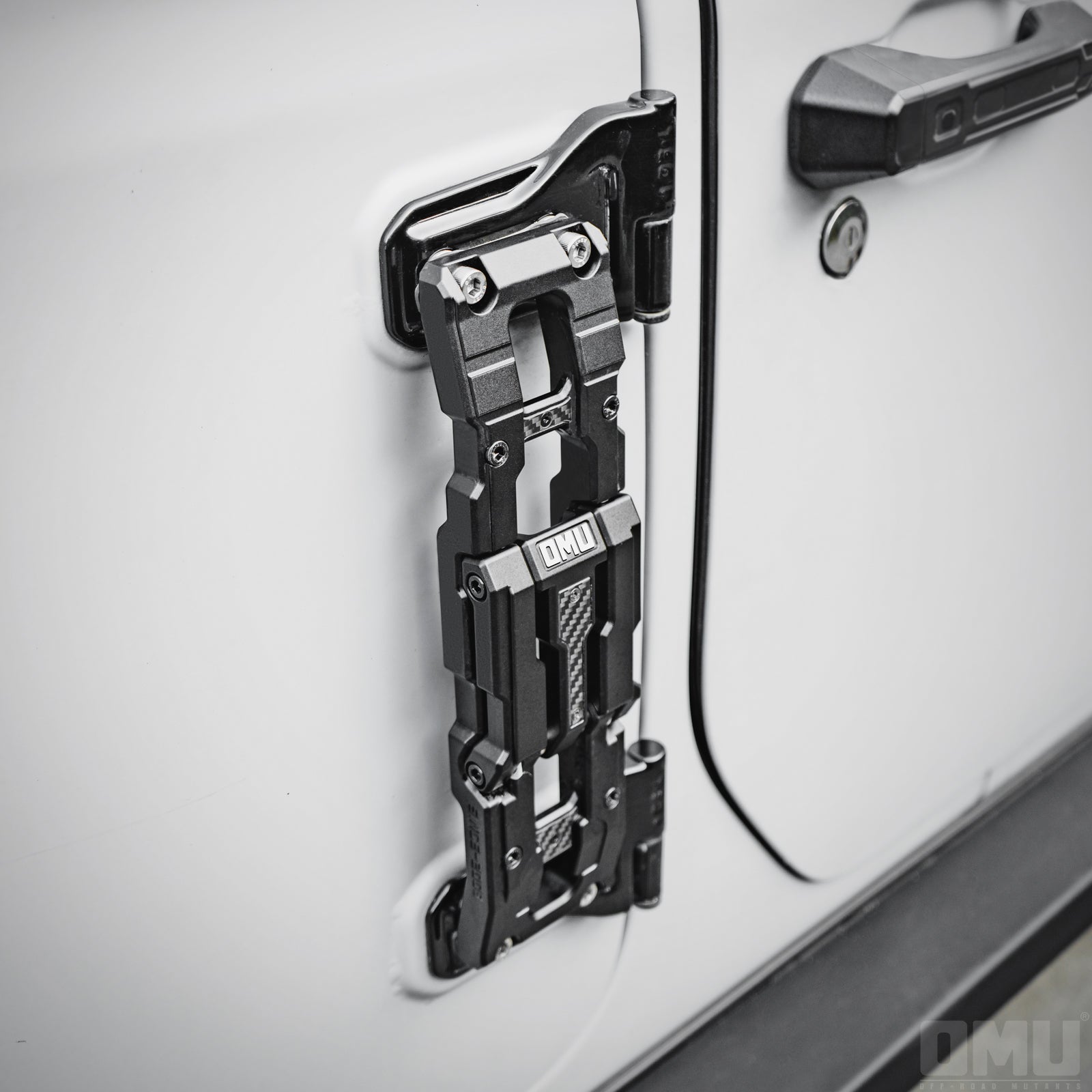
Rule 6: Make Roof Gear Easier to Reach
A roof rack is not complete if the driver cannot reach it easily. Roof access matters during loading, unloading, strap checks, and camp setup. A folding door hinge step supports the roof cargo system by giving the driver a more convenient access point.
Recommended Roof Access Utility Part
Avoid the Random Parts Problem
A vehicle can have many accessories and still be difficult to use. This happens when parts are added without a system. Overland Modular Utility parts should reduce confusion, not create more of it. Gear should be grouped by task, weight should be managed carefully, and access should be planned before the vehicle is packed.
- Do not place every item on the roof just because space is available.
- Do not overload side panels with heavy gear that belongs in the cargo area.
- Do not mix fuel, water, clothing, food, and tools into one storage zone.
- Do not add lighting without considering glare, beam angle, and real use.
- Do not choose accessories only for appearance if they do not improve utility.
Final Thoughts
OMU overland modular utility is about building a smarter vehicle. When each accessory supports a clear role, the Jeep becomes cleaner, more practical, and more prepared for real overland travel. The roof carries bulky gear, the side organizes tools, the tailgate supports quick-use items, the Jerrycan kit handles liquid support, the lights improve visibility, and the step makes roof access easier.
Explore OMU and Maiker Jeep accessories →
Frequently Asked Questions
What are Overland Modular Utility parts?
They are vehicle accessories designed to create practical zones for cargo, storage, lighting, access, fuel, water, and trail support.
How is OMU overland modular utility different from normal accessories?
It focuses on how accessories work together as a system instead of treating each part as a separate visual upgrade.
What OMU utility part should I choose first?
Start with the part that solves your biggest practical problem, such as roof cargo, tool access, fuel support, or night visibility.
Can Overland Modular Utility parts be added in stages?
Yes. A vehicle can start with cargo or storage upgrades, then add lighting, Jerrycan support, side panels, and roof access as trip needs grow.