
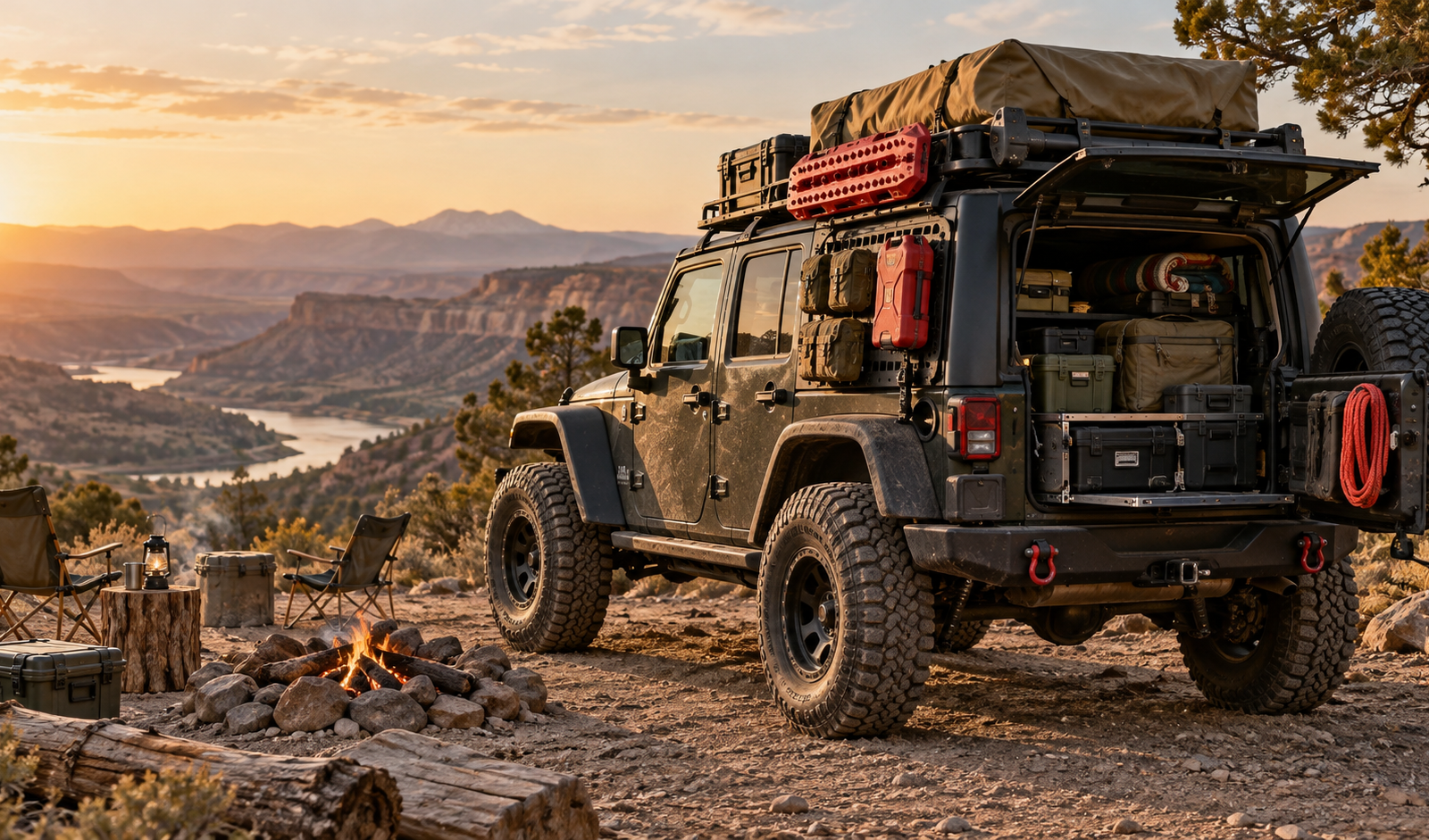
OMU modular off-road accessories are designed around one simple idea: the vehicle should be easier to use in real conditions. A modular build does not rely on one oversized part. It uses multiple functional accessories that work together across the vehicle.
For Jeep owners, OMU modular 4×4 parts can help divide the vehicle into useful zones. Tools can be placed on side panels. Fuel or water can be carried outside the cabin. Roof cargo can hold bulky gear. Lighting can support night visibility. Access parts can make roof-mounted equipment easier to reach.
What Does Modular Utility Mean?
Modular utility means every accessory has a job and can work with other parts. A rear window panel is not just extra storage. It is a side-access tool zone. A tailgate basket is not just a basket. It is a rear work station. A Jerrycan kit is not just an exterior part. It separates liquid storage from the main cabin.
| Modular Part | Function | Best Use |
|---|---|---|
| MOLLE panel | Small gear organization | Recovery tools, pouches, lighting kits |
| Tailgate basket | Rear-access storage | Camp tools and quick-use accessories |
| Jerrycan kit | Fuel or water support | Longer trail travel |
| A-pillar light | Side-forward visibility | Night trails and campsite entry |
Build Around Access, Not Just Capacity
More capacity is useful only when gear can be reached. A modular Jeep build should keep frequent-use items near the outside of the vehicle. Recovery accessories, gloves, straps, and lighting tools should not be buried under camping bags.
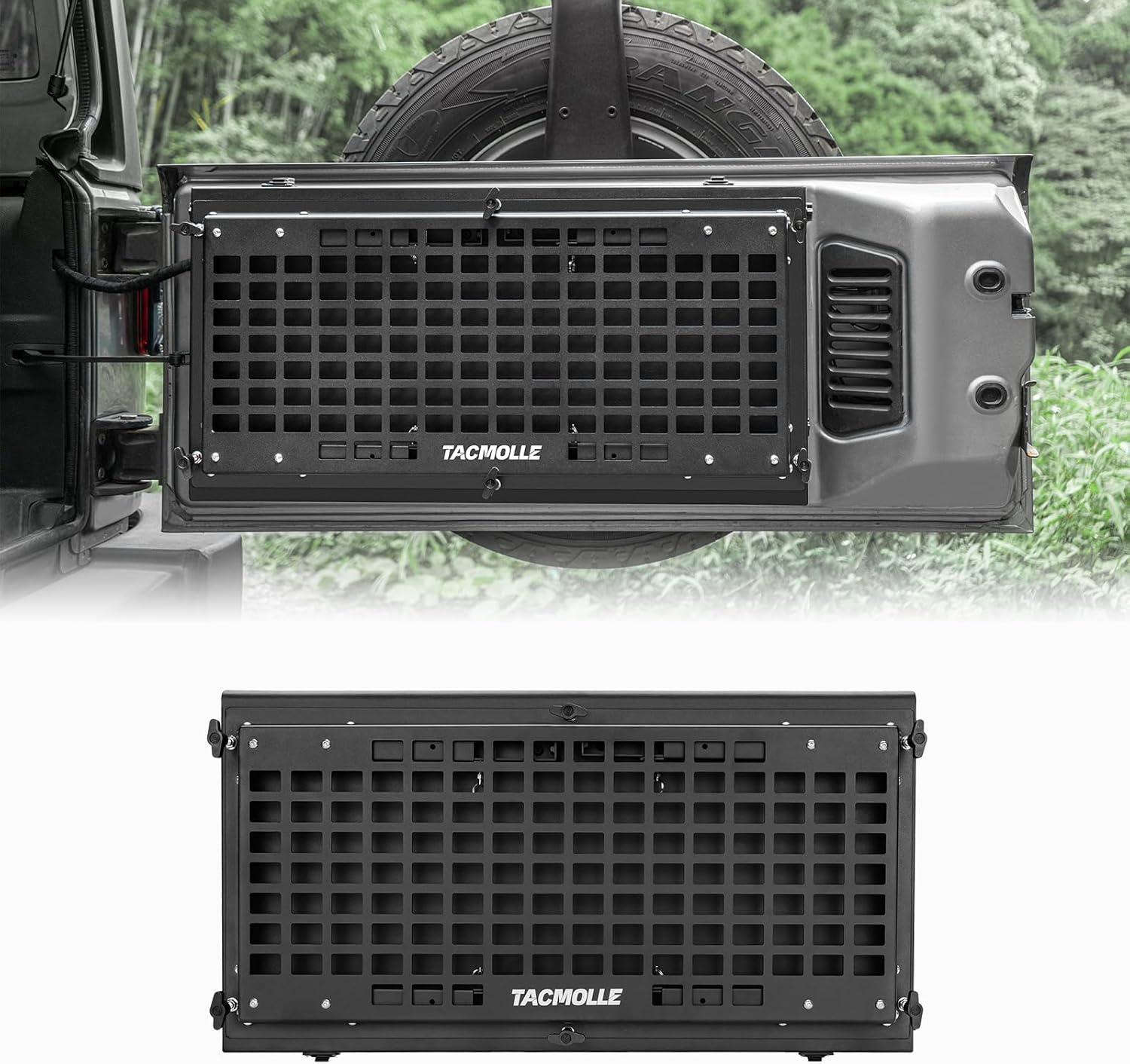
Recommended OMU Modular Storage Upgrade
Combine Rear and Side Storage
A strong OMU overland modular utility setup uses both rear and side access. The side panel can hold smaller tools and pouches. The tailgate area can support larger quick-use items. This makes the vehicle more practical at camp and during trail stops.
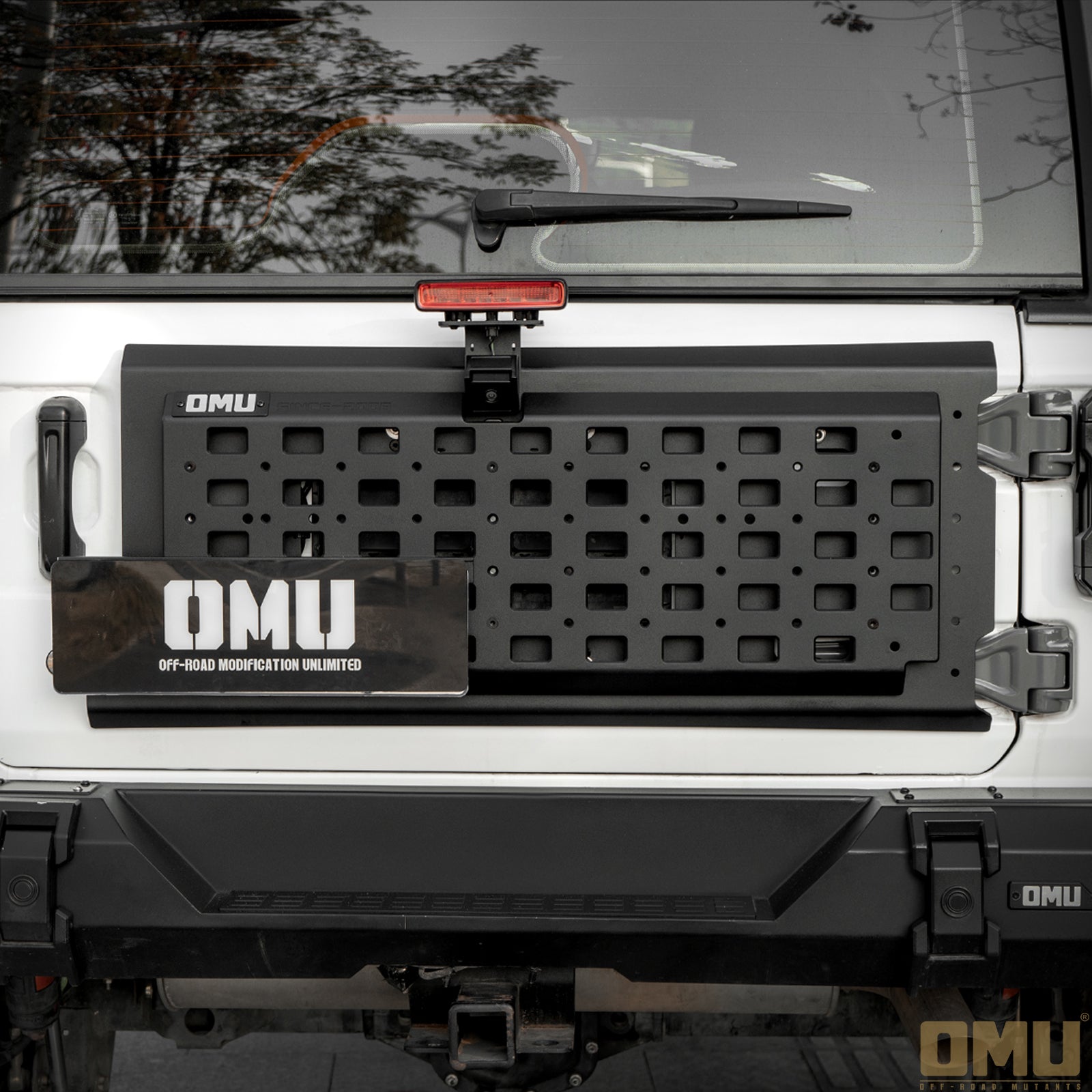
Recommended Rear Utility Upgrade
How Modular 4×4 Parts Prevent Gear Confusion
A vehicle can have many accessories and still be difficult to use if the gear plan is unclear. Modular 4×4 parts should reduce confusion by giving each type of item a predictable location. The driver should know where the recovery pouch, flashlight, strap, tool kit, and camp accessory kit are stored before the trip begins.
- Use side MOLLE panels for small tools and pouches.
- Use tailgate storage for rear-access camp and trail gear.
- Use roof racks for bulky items that do not need constant access.
- Use Jerrycan support for fuel or water instead of mixing liquids with cabin cargo.
- Use lighting accessories to support the zones that factory headlights do not cover well.
Modularity by Vehicle Zone
Modular accessories are most effective when each part has a clear job and can be accessed without disturbing the rest of the vehicle. Divide the Jeep into practical zones: roof cargo for bulky equipment, rear storage for frequent-use tools, and the cabin for weather-sensitive or high-priority items.
Make frequently used gear easy to reach
Gloves, lighting controls, tire tools, recovery straps, and basic first-aid items should not be buried below camping luggage. A rear window panel or tailgate storage solution can create a predictable place for these items and make trail preparation faster.
Leave room to reconfigure
A modular layout should work for a weekday commute as well as a weekend trip. Use removable bags, pouches, and boxes where possible, and avoid permanently blocking doors, windows, service panels, or passenger space.
Installation and Maintenance Routine
- Confirm that each bracket is mounted square and does not rub against the body.
- Check that doors, windows, and the tailgate open through their full range.
- Keep mounting hardware and connectors accessible for inspection.
- Secure loose equipment before entering rough terrain.
- Inspect the full system after the first trail drive and after major cargo changes.
A Simple Modular Build Plan
Start with the part that solves the most common problem, then add the next accessory only when the vehicle reveals a real limitation. This may mean storage first for a camping vehicle, access first for a roof-rack user, or lighting first for night trail driving. A staged build reduces clutter and keeps the final system easier to use.
With clear zones and repeatable packing habits, modular OMU accessories can make the Jeep more functional without making it harder to live with every day.
Final Thoughts
OMU modular off-road accessories help transform a Jeep from a vehicle with parts into a vehicle with a system. When each part supports storage, access, visibility, or trail utility, the build becomes cleaner and more useful.
Frequently Asked Questions
What are OMU modular off-road accessories?
They are accessories designed to work together as functional vehicle zones for storage, access, lighting, and trail utility.
Why choose modular 4×4 parts?
Modular parts make it easier to organize gear by function instead of placing everything into one crowded cargo area.
Can modular accessories be upgraded in stages?
Yes. Most owners can start with storage or cargo needs, then add lighting, fuel support, and roof access over time.
What is OMU overland modular utility?
It is a build concept that uses accessories as connected utility zones, helping the vehicle carry, organize, access, and use gear more efficiently during overland travel.