
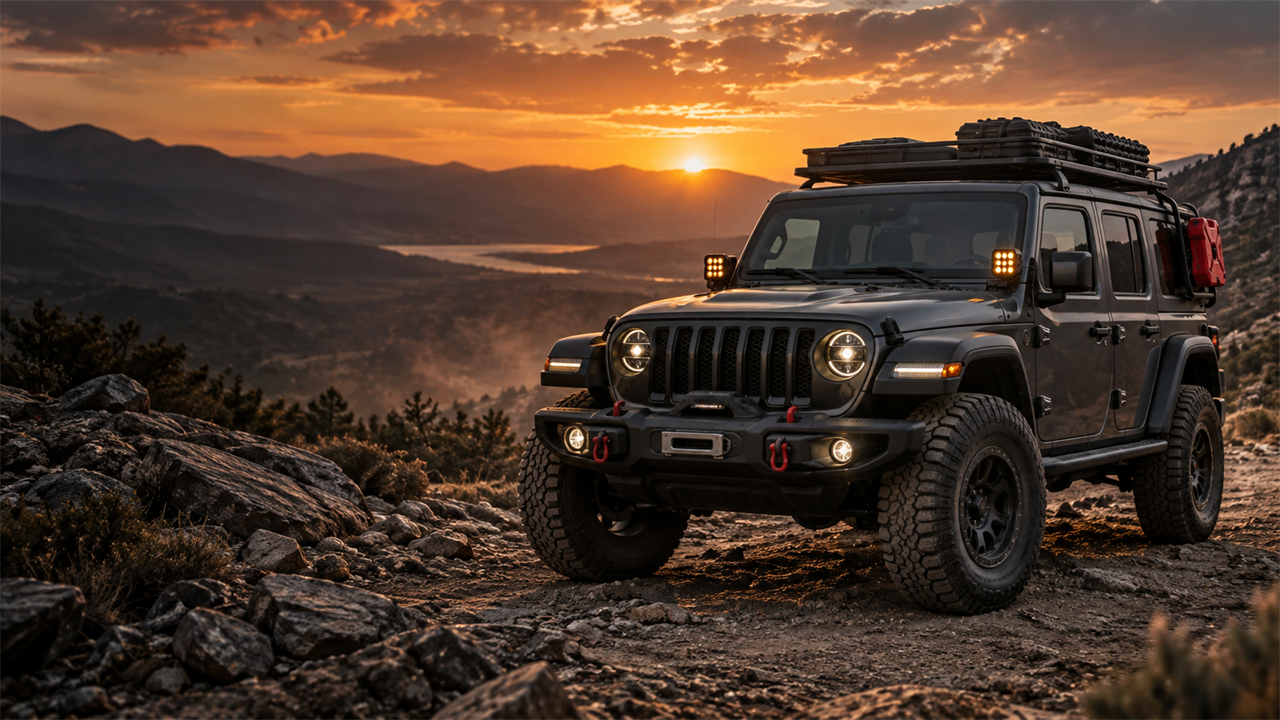
Choosing OMU off-road parts is not only about making a Jeep look tougher. For real trail driving, every part should solve a practical problem: carrying more gear, improving access, protecting key equipment, supporting fuel or water storage, or making night driving easier. A clean off-road build starts with purpose, not decoration.
OMU off-road accessories are built around modular utility. Instead of treating each upgrade as an isolated part, Jeep owners can plan a complete system: roof cargo, rear storage, side-access tools, Jerrycan support, lighting, and roof access. This makes the vehicle easier to pack, easier to use, and more prepared for overland travel.
What Makes Good OMU Off-Road Parts?
Good off-road parts should match the vehicle’s real use. A daily Jeep with weekend trail use needs accessories that are practical without making normal driving inconvenient. A long-distance overland build needs more storage, better organization, and safer access to equipment. A technical trail vehicle may need stronger visibility, exterior utility, and easier recovery gear access.
| Upgrade Area | Main Purpose | Recommended OMU Direction |
|---|---|---|
| Roof cargo | Carry bulky overland gear | Roof rack and cargo platform |
| Exterior storage | Keep tools accessible | Rear window panel or MOLLE panel |
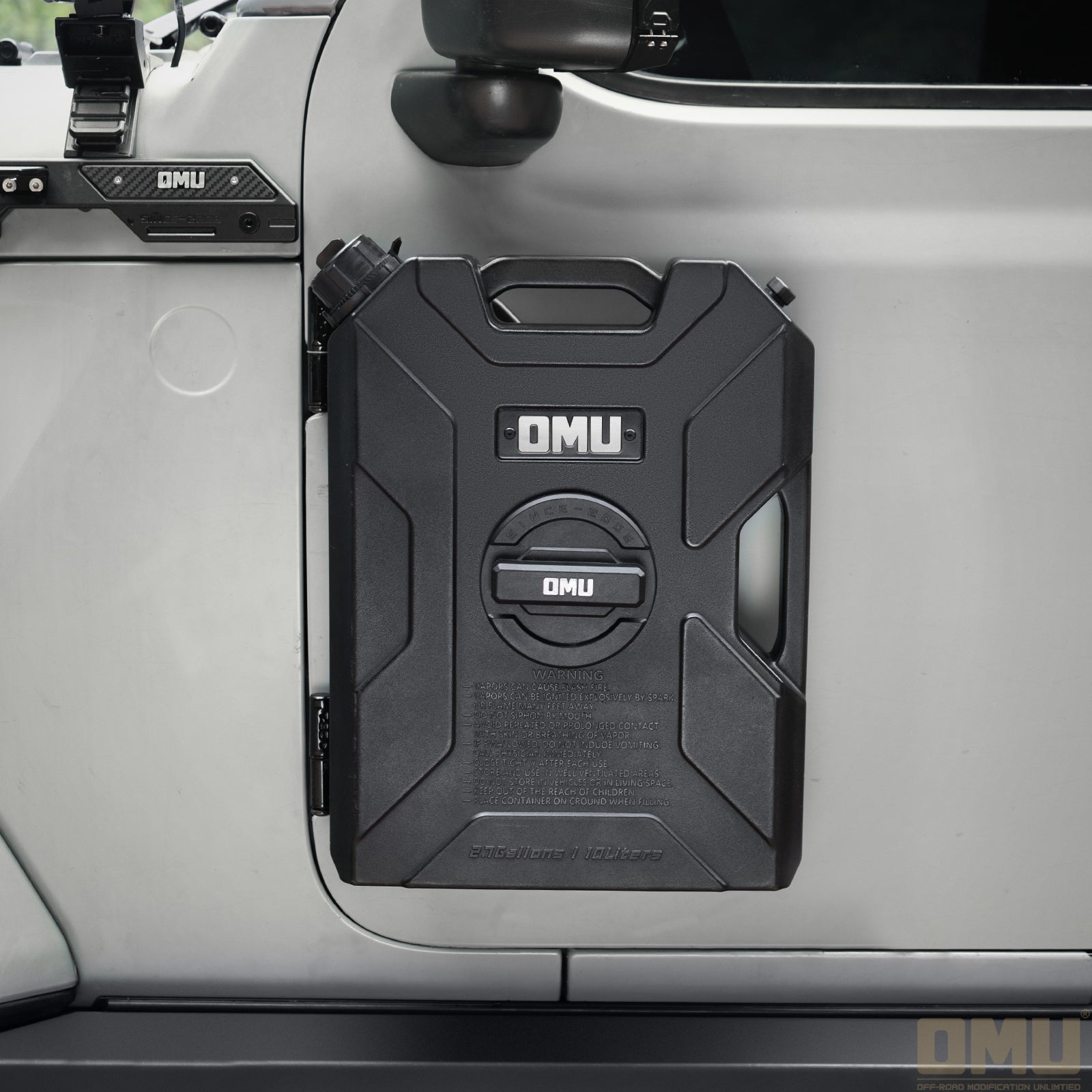
| Fuel and water | Support longer trail travel | Jerrycan kit |
| Lighting | Improve night visibility | A-pillar spotlight and mount |
Start with Cargo Before Adding More Accessories
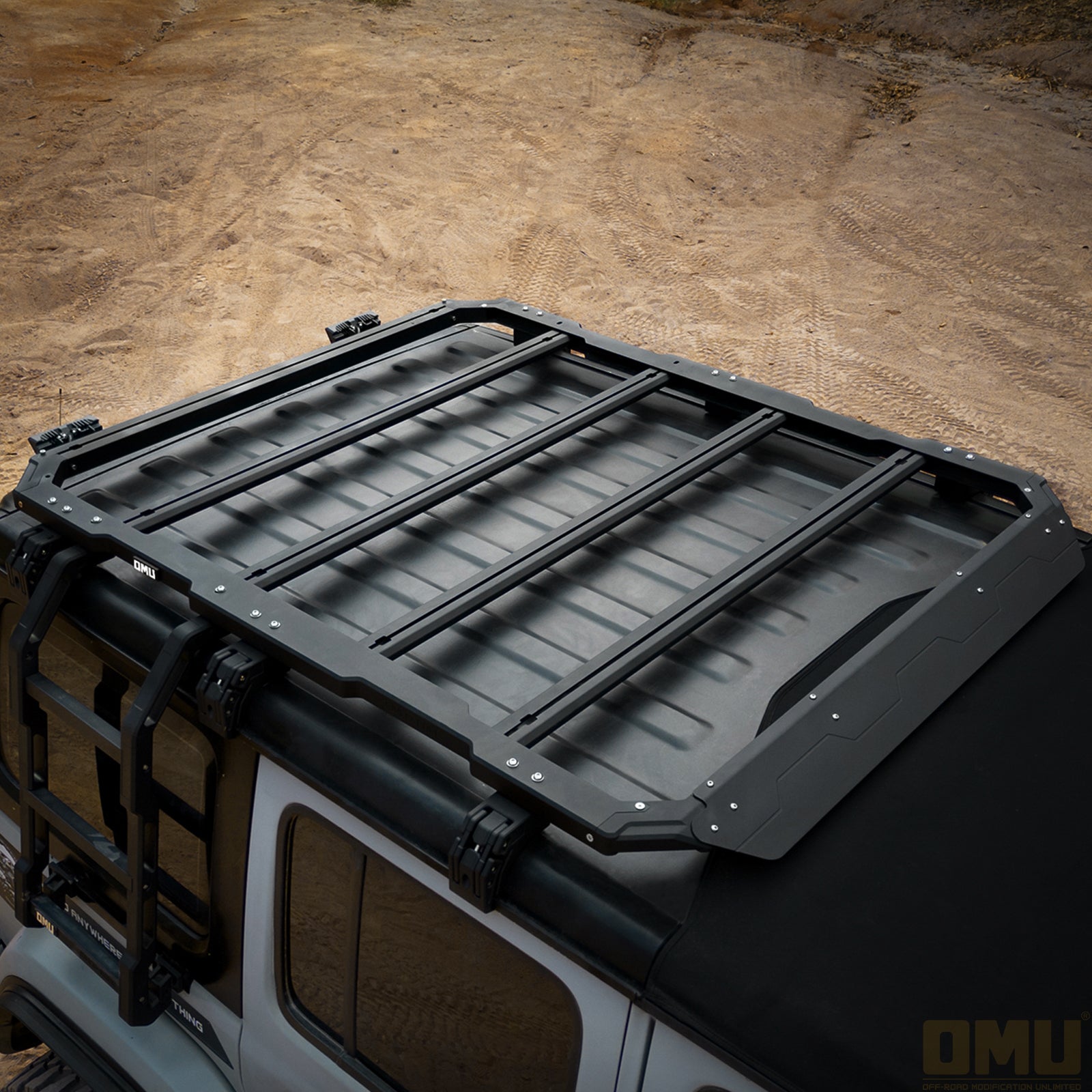
Many Jeep builds fail because every accessory is added independently. A roof rack should not be chosen only for appearance. It should support the gear plan: storage boxes, camping bags, recovery boards, and other bulky items that do not need to stay inside the cabin.
Recommended OMU Roof Cargo Upgrade
Use Exterior Space for Practical Utility
OMU modular off-road accessories work best when each exterior zone has a job. The roof should carry bulky items. The rear window area can hold tools and MOLLE pouches. The door hinge area can support fuel or water. The A-pillar area can improve side-forward lighting. This zoning method keeps the Jeep cleaner and easier to use.
Recommended OMU Fuel & Water Support
How to Choose OMU Off-Road Accessories by Build Stage
A practical build should grow in stages. Start with the problem that affects your trips most often. If cargo space is the main issue, choose roof or rear storage first. If night driving feels unsafe, add A-pillar lighting. If the vehicle is used for longer trips, plan fuel or water storage before the route becomes remote.
- Define your main trip type: daily driving, camping, trail driving, or long-distance overlanding.
- Separate gear into cargo, tools, lighting, fuel, water, and personal storage.
- Choose accessories that give each gear group a clear location.
- Avoid adding heavy exterior parts without a real usage reason.
- Review fitment and installation before planning the full build.
Roof Rack Load Planning and Access
A roof rack becomes more useful when it is treated as part of the vehicle system rather than as extra space for random cargo. Place bulky but relatively light equipment on the roof, keep frequently used tools lower and closer to the rear of the vehicle, and make sure every item can be secured without blocking doors, lights, or recovery points.
Keep the load organized
Use a simple zone plan for roof cargo. Camping bags, recovery boards, awning equipment, and weather-sensitive items should each have a fixed position. Consistent placement makes loading faster and makes it easier to notice when a strap, cover, or mounting point needs attention.
Plan access before the trip
Roof cargo is only useful when it can be reached safely. Check where the driver will stand, how a box or bag will be removed, and whether a door hinge step or side access point would make regular loading easier. Avoid placing daily-use equipment behind a large item that must be removed first.
Fitment and Installation Checklist
- Confirm the exact Jeep model, generation, body style, and model year.
- Check clearance around the roof, doors, hinges, windows, lights, and existing racks.
- Use protected cable routing and keep wiring away from sharp edges and moving panels.
- Recheck mounting hardware after the first rough-road drive.
- Keep recovery gear and emergency tools reachable even when the vehicle is fully loaded.
Build in Stages
For a daily-driven Jeep, start with storage and access improvements that solve a frequent problem. Add lighting and fuel or water support when the vehicle begins to take longer trail or camping trips. This staged approach keeps the build practical and makes it easier to confirm that every new part adds useful capability.
Before a long trip, test the complete loaded setup at home. Open the doors, inspect the straps, check the lights, and remove the equipment that will be needed first at camp. A smarter utility setup is one that reduces preparation time as well as improving trail readiness.
Final Thoughts
The best OMU off-road parts are the ones that improve how the Jeep works on real trips. When cargo, lighting, storage, access, and utility are planned as one system, the vehicle becomes more capable without becoming messy or overloaded.
Frequently Asked Questions
What are OMU off-road parts used for?
They are used to improve Jeep storage, cargo carrying, trail lighting, roof access, fuel or water support, and exterior utility for off-road and overland builds.
Are OMU accessories suitable for overlanding?
Yes. OMU overland accessories are useful for organizing gear, improving trail readiness, and building a cleaner modular vehicle setup.
Should I start with a roof rack or smaller storage parts?
Start with the biggest practical problem. If cargo space is limited, a roof rack is often a strong first upgrade. If small gear is messy, a storage panel may be better.
Are OMU parts only for Jeep builds?
Many OMU products are designed around specific vehicle platforms. Buyers should always confirm model, year range, mounting position, and compatibility before ordering.